Home / Digital Forays / #2
Digital Data Gathering & Changing Ways of Knowing II: Social Media Afterlives
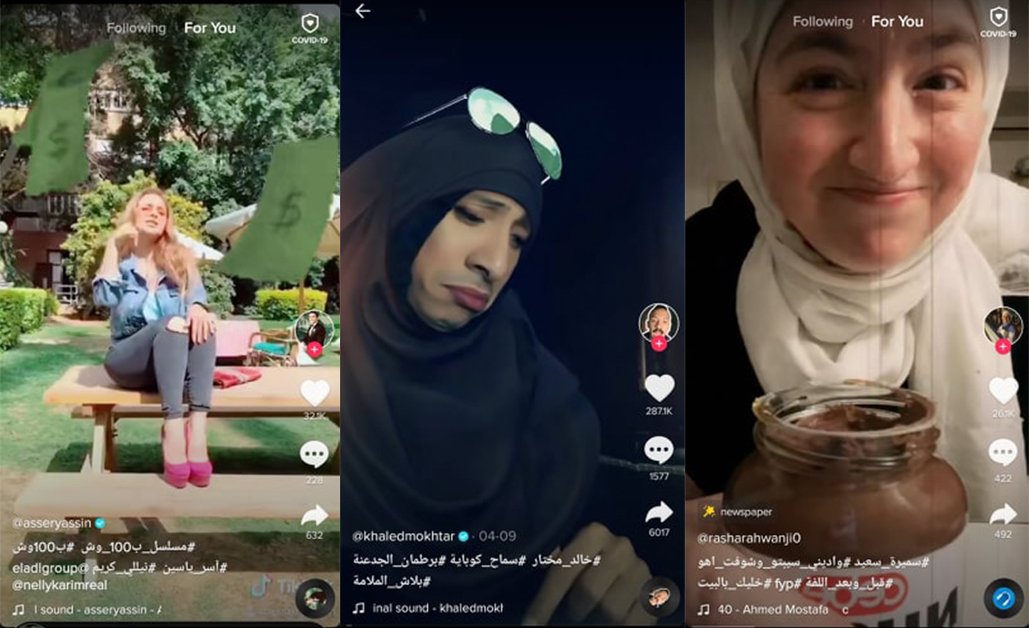
This session examines how digital records (TikToks, Tweets, live streams, and social media posts capturing unfolding events) are being saved, aggregated, cross-referenced, processed by computer vision, and preserved as evidence. The panel explores the methods and implications of digital data gathering in the context of changing ways of knowing, and the conditions under which social media content becomes an archive of memory, violence, and resistance.
Speakers
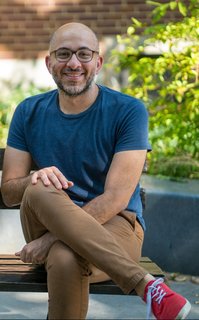
Has over 10 years of experience as an academic and corporate researcher focusing on technology, innovation, and entrepreneurship. Holds a doctorate in Cultural Anthropology from Duke University, an MA in Sociology from The American University in Cairo, and a BE in Computer Engineering from Cairo University. Previously founded the Media Ethnography Lab at The Center for Advanced Research in Global Studies at the University of Pennsylvania and led research at Duke's Department of Cultural Anthropology. Has taught undergraduate and graduate seminars on global economies, creative industries, and qualitative research at Duke University, Bryn Mawr College, University of the Arts, and George Washington University.
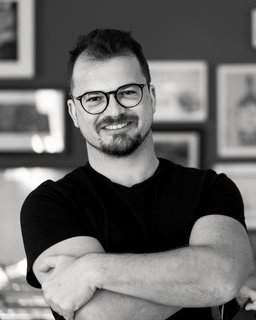
Assistant Professor at HBKU. His research focuses on disinformation on social media in the Middle East. Received his PhD in 2016 from Durham University, where he wrote an interdisciplinary thesis on the history of political repression in Bahrain, winning the 2016 AGAPS prize. Author of Digital Authoritarianism in the Middle East (Hurst/OUP, 2021) and a monograph on political repression in Bahrain (Cambridge University Press). Has bylines in the Washington Post, New Statesman, CNN, the Independent, and PEN International, and has appeared on the BBC, Channel 4 News, and Al Jazeera.
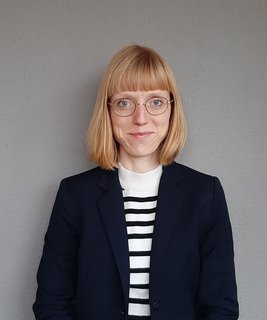
Social anthropologist and British Academy Newton International Fellow at the University of Cambridge. Research focuses on the impact of state violence on intimate and gendered lives, the politics of death and the afterlife, and the intersections of affect and politics. Specializes in the anthropology of the Kurdish regions and modern Turkey. Previously a Marie Skłodowska-Curie Fellow at the Middle East and North Africa Research Group at Ghent University. Her work has been published in Comparative Studies in Society and History, the Journal of the Royal Anthropological Society, and Social Anthropology.
Discussant
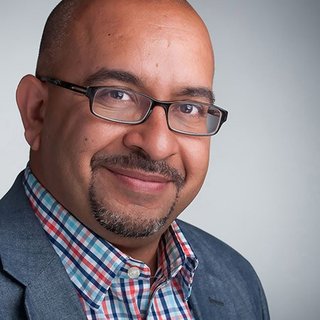
Assistant Professor of Global Communication at Simon Fraser University. Author, co-author, and editor of several works including Egypt In Flux: Essays on an Unfinished Revolution (AUCP/OUP); Al-Jazeera: The Story of the Network that is Rattling Governments and Redefining Modern Journalism (Basic Books); and Mediating the Arab Uprisings (Tadween Publishing). His work deals with media, identity, and politics; he has lectured extensively on these topics at universities worldwide.
From the Conversation
Yakein Abdelmagid (Research Strategist) opened up this virtual event with a discussion of digital and social media afterlives in terms of new waves of scalability operating off an interplay of repetition and difference.
Marc Owen Jones (HBKU) continued by expanding on the multiscalar ethical implications of Twitter data collection. Looking at harassment and disinformation campaigns, his queries centered around what happens when data is extracted from a public moment in time and then rendered private by downloading it. He raised critical questions about the use of this data and who/what has access to it and can control it.
Marlene Schäfers (University of Cambridge) used the social media afterlives of Kurdish freedom fighters to argue that the oscillation between individuation and aggregation in commemorating them as martyrs (as well as the Turkish state's attempts to disappear these accounts) indicates spaces where power is made and unmade.
Adel Iskandar (SFU) noted throughout the discussion that what we choose to consolidate, curate and employ in the digital is exactly what gives it an afterlife. The ephemeral nature of social media renders important questions on immortality, memory, and corporeality, as well as an intriguing topography of consent-making, knowledge production, and present absence.
Recording
Paired with seminar
Session 8 → Module III: Archive Fever: Documents, Objects & ImagesDigital Forays · 6 events in the series
← Previous
#1: Digital Data Gathering & Changing Ways of Knowing I: Witnessing + Proof + Human Rights
March 4, 2021
You are here
#2: Digital Data Gathering & Changing Ways of Knowing II: Social Media Afterlives
March 18, 2021
Next →
#3: Space & Place I: Critical Mapping & Counter-Cartography
April 1, 2021